
AER Compact XL Manual
PDF manual · 12 Pages
English



Ask a Question
Frequently Asked Questions
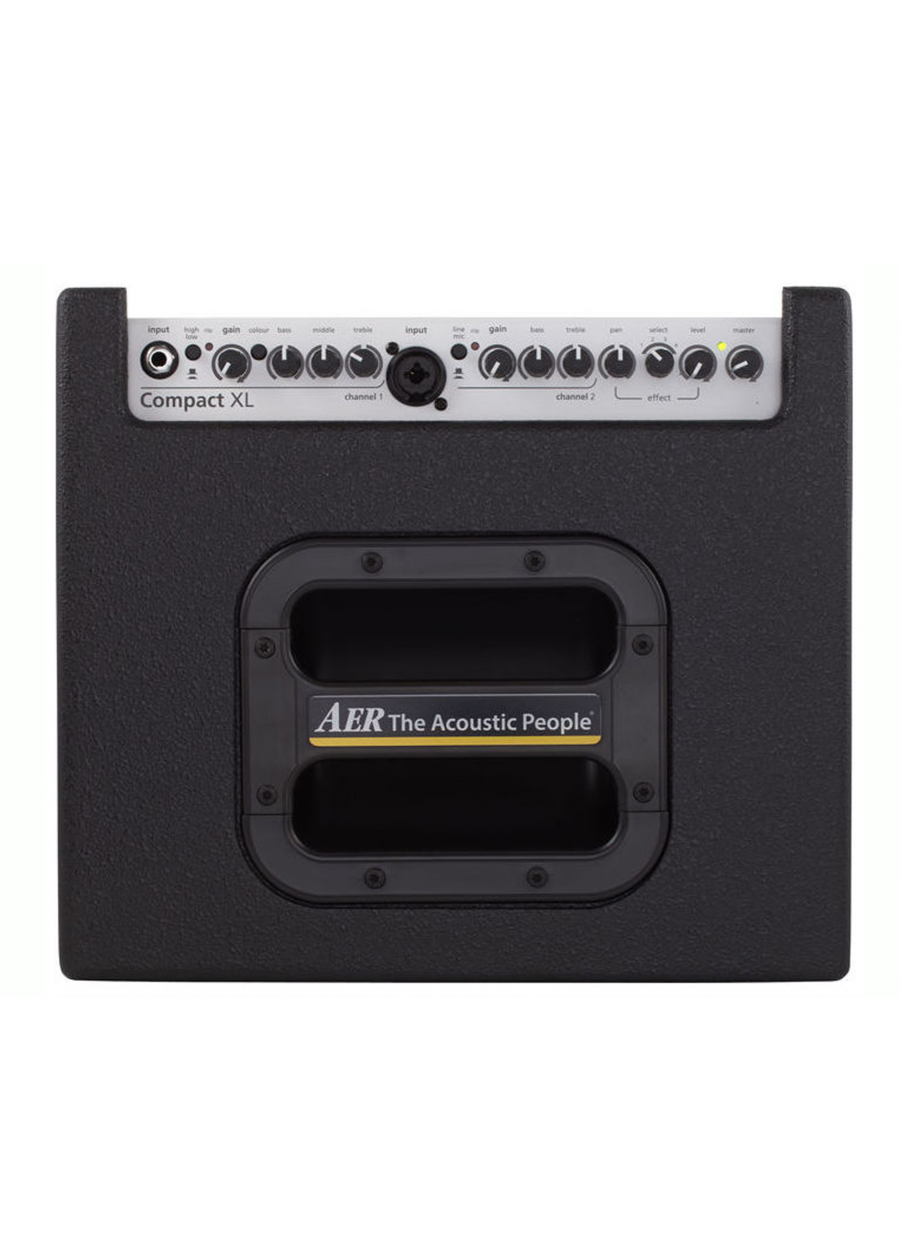
It has two channels: channel 1 is a 1/4" jack (instrument) with switchable high/low sensitivity and 9V phantom on ring; channel 2 is a combo jack/XLR for line or mic (XLR supports 48V phantom). There are also aux L/R RCA inputs, send/return, tuner, line out and DI XLR out.
Is this answer helpful?
Switch on 9V only for devices explicitly designed for it (channel 1 uses ring contact with a stereo jack). Use 48V on channel 2 XLR only for condenser mics or devices rated for 48V. If unsure, keep phantom off and consult the device manufacturer to avoid damage.
Is this answer helpful?
Internal effects include short reverb, long reverb, 320 ms delay, and chorus. Use the send (output) and return (input) sockets on the rear to insert external effects; the footswitch can toggle internal and external effects and the efx-pan control blends effects across channels.
Is this answer helpful?
Start with master and level controls at minimum, set gain until the clip LED flashes momentarily on strong attacks, then back off slightly for headroom. The clip LED indicates overload; brief flickers are acceptable but sustained lighting requires reducing gain or master level.
Is this answer helpful?
Yes. Plugging stereo headphones into the dedicated socket mutes the internal speaker. Use only stereo jack plugs; using mono plugs may cause malfunction or improper muting.
Is this answer helpful?
Outputs include a balanced DI XLR (post-EQ, pre-effects, pre-master adjustable), a line out (post-master), a tuner out (pre-effects, post-EQ), and a send output for external effects. These options provide flexible routing to PA or recording gear.
Is this answer helpful?
Yes. Its 10 kg weight, birch plywood cabinet, neodymium drivers and efficient 200 W amp make it portable and stage-ready while offering robust tone shaping, DI output and effects for live performance situations.
Is this answer helpful?
Advantages and Disadvantages
Advantages

- Dual channels with independent EQs and inputs for simultaneous instrument and mic use
- Compact, lightweight cabinet with high-efficiency 2-way speaker and 200 W amp
- Built-in digital effects (reverbs, delay, chorus) plus send/return for external units
- 9V and 48V phantom power options for active pickups and condenser microphones
- Balanced DI output post-EQ for direct connection to FOH or recording
Disadvantages

- Relatively small speaker size (8") may limit extreme low-end extension
- 9V phantom requires stereo jack wiring and can damage non‑compatible gear if misused
- No user-serviceable internal components; repairs must be carried out by qualified technicians
- Headphones socket requires stereo plug only and mutes the speaker, limiting monitoring options
- Limited on-board mid control range on channel 2 (only bass and treble shelving in some modes)
Product Description
AER Compact XL Manual — Compact, Powerful, and Player-Friendly
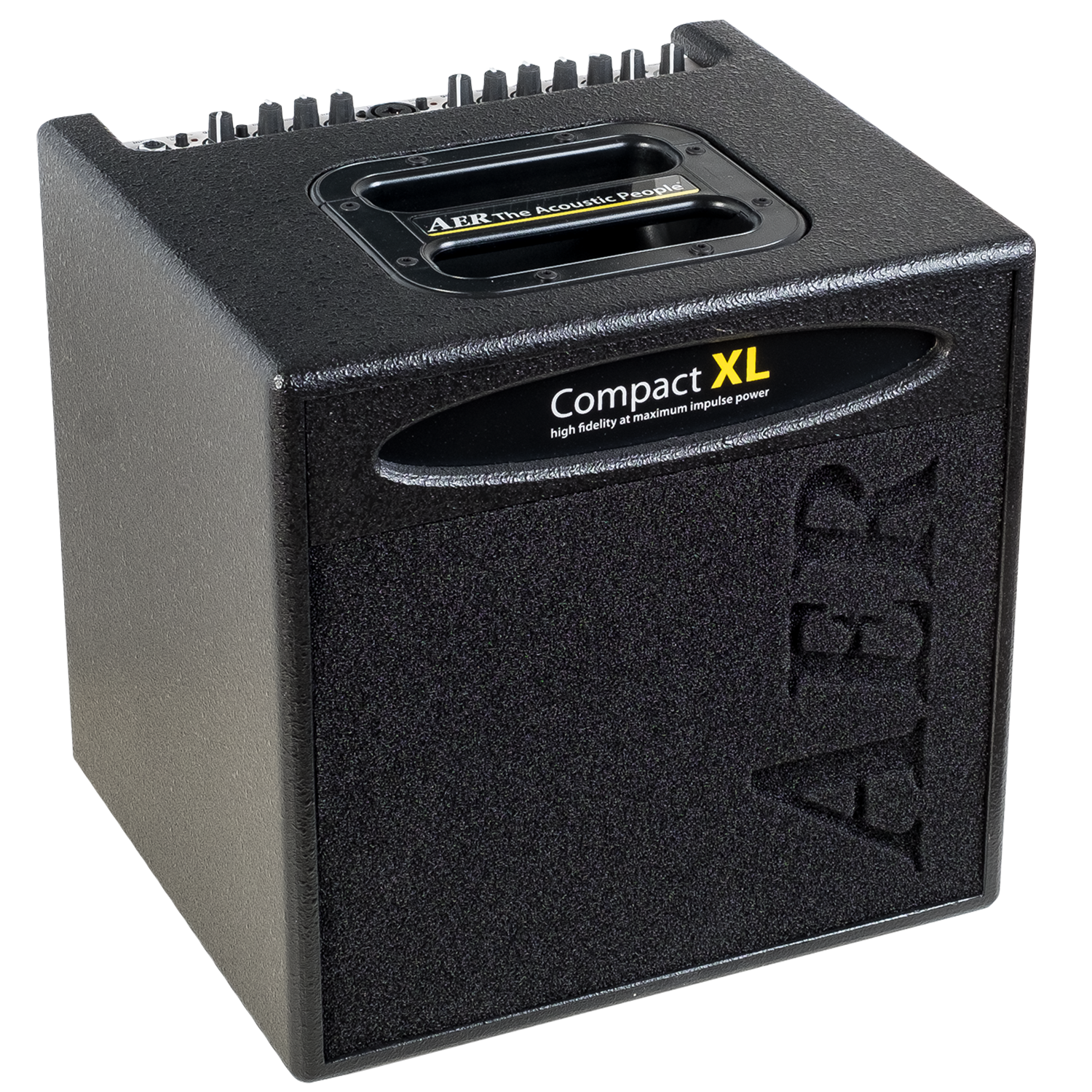
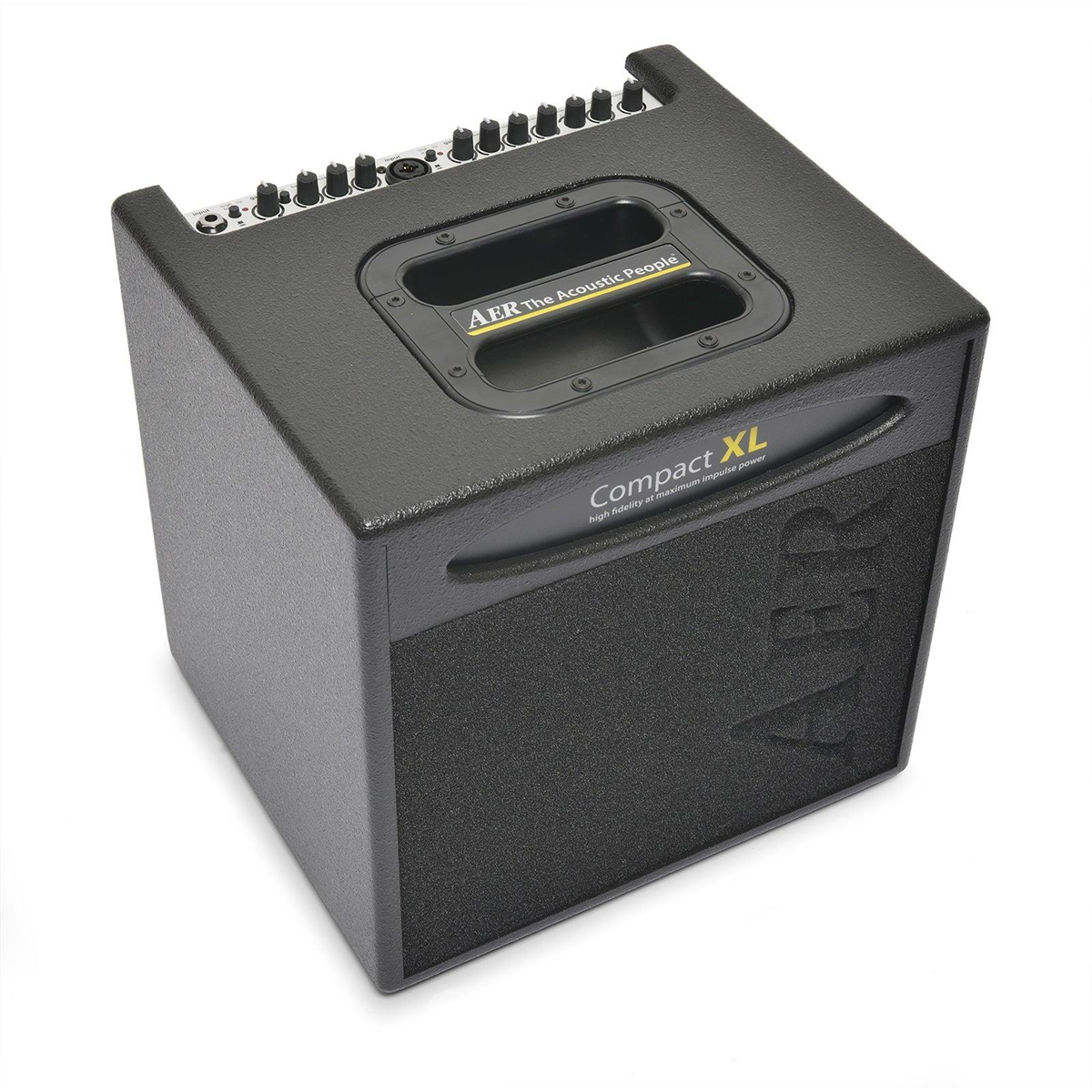
The AER Compact XL is a professional, portable amplifier tailored for acoustic instruments and versatile enough for electric instruments and vocal use. With two independently adjustable channels, it allows simultaneous instrument and microphone inputs, plus the option to blend a playback source. Its efficient power amplifier and 2-way speaker system deliver clean, low-distortion sound even at high volumes, while a compact, lightweight cabinet makes it stage- and travel-friendly.
Design and Controls
The Compact XL places intuitive controls on the front panel: dedicated inputs for channel 1 (instrument) and channel 2 (combo jack/XLR), gain, three-band EQ (bass, middle, treble), a colour filter for tonal shaping, clip indicator, internal effects level and master volume. The rear panel offers practical features such as a ground-lift switch, 9 V phantom for active pickups on channel 1, 48 V phantom on the XLR channel 2 for condenser mics, stereo aux input, tuner out, line out, DI XLR out, send/return for external effects, headphones output, and a footswitch socket for toggling internal/external effects.
Sound and Effects
The EQ is active and musical, designed to preserve natural instrument timbre while allowing meaningful tone shaping. The colour filter lifts treble and reduces mids for a brighter, airier sound, useful for fingerstyle playing. Built-in digital effects include two reverbs (short/long), delay (320 ms), and chorus. An efx-pan control blends internal and external effects between channels, giving flexible routing for live setups.
Practical Operation
Startup guidance emphasizes correct cabling, zeroed master/gain settings, and safe level staging to avoid clipping. A clear clip LED aids gain staging, and an internal limiter protects the system. Headphones mute the speaker for silent practice; note the headphones jack requires stereo plugs. The amp’s robust safety and service notes include ventilation, correct mains/fuse use, and avoiding exposure to moisture or heat.
Build and Specs
The Compact XL uses a 200 W power amp with neodymium drivers in an 8" low-mid plus 1" tweeter 2-way system, delivering punchy, transparent sound with low weight (approx. 10 kg). Inputs have generous sensitivity ranges and the DI output provides a balanced feed post-EQ and pre-effects for direct FOH or recording. Mains variants cover global voltages and the cabinet is sturdy birch plywood with a durable finish.
Notes:
- Use 9V phantom only for devices designed for it; 48V is available on channel 2 XLR for condenser mics.
- Always set gain and master low before playing; brief clip LED flashes are acceptable, sustained lighting indicates reducing gain.
- Headphones output mutes internal speaker; use stereo jack plugs only.
Search for 166 Manuals online


Type-in Brand or Model