
Fibaro CO Sensor, Air Quality Sensor Manual
PDF manual · 17 Pages
English



Ask a Question
Frequently Asked Questions
The sensor uses one CR123A 3.0V battery (included). Estimated battery life on default settings is about 3 years with recommended lithium cells. Replace with the specified battery type and observe correct polarity.
Is this answer helpful?
Mount the cover on a wall below ceiling level and at least 30 cm from corners. Attach the device to the cover and turn clockwise to close. Avoid bathrooms, direct sunlight, heat sources and locations accessible to children.
Is this answer helpful?
Yes. It is a Z-Wave Plus device compatible with Z-Wave controllers. It supports secure mode (AES-128). Use a Security Enabled controller to access full security functionality and configure associations and reporting via the controller interface.
Is this answer helpful?
Red blinking with repeated 4-beep sequences signals CO detected—move to fresh air. Yellow indicates low battery. Cyan and 2-beeps indicate end of lifespan. Blue signals heat alarm. Green shows successful network addition or power; magenta indicates out-of-range.
Is this answer helpful?
Use the device button: short press wakes it; press-and-hold enters the menu for tests, range check, firmware update or reset. Follow menu color cues and confirm selections. Use factory reset only if controller is unavailable; adding/removing via the Z-Wave controller is preferred.
Is this answer helpful?
Yes. The sensor supports multiple association groups (CO Alarm, CO Level, Tamper, Lifeline, and backward-compatibility groups) to directly control or notify associated devices when alarms or thresholds are reached.
Is this answer helpful?
Measurement range is 0–450 ppm with accuracy of ±10 ppm or ±5%. Default alarm response times: ~60–90 minutes at 50 ppm, 10–40 minutes at 100 ppm, and under 1.5 minutes at 300 ppm. Thresholds and timing can be adjusted in advanced parameters.
Is this answer helpful?
Advantages and Disadvantages
Advantages

- Early CO detection with loud siren and multi-color LED for clear alerts.
- Z-Wave Plus compatibility with AES-128 security for integrated smart-home automation.
- Battery-powered, wireless design with ~3 years battery life for flexible placement.
- Advanced configurable parameters and association groups for automation and direct device control.
- Built-in temperature sensor and multiple notification types (tamper, low battery, heat).
Disadvantages

- May not detect long-term low-level CO exposure—not a replacement for ventilation.
- Battery replacement required every few years and uses specific CR123A cells.
- Loud alarm can be uncomfortable during self-tests or initial alerts.
- Certain environments (vapors, dust, condensation) can affect reliability.
- Full security features require a Security Enabled Z-Wave controller to function completely.
Product Description
Fibaro CO Sensor — Air Quality Sensor Manual
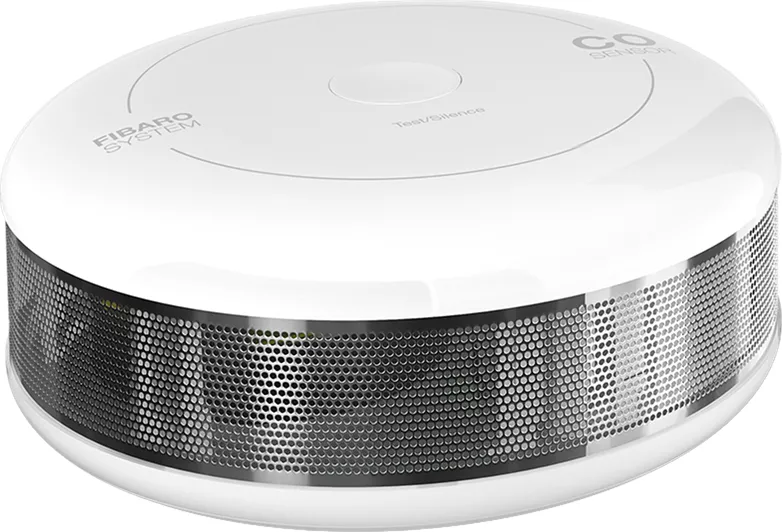
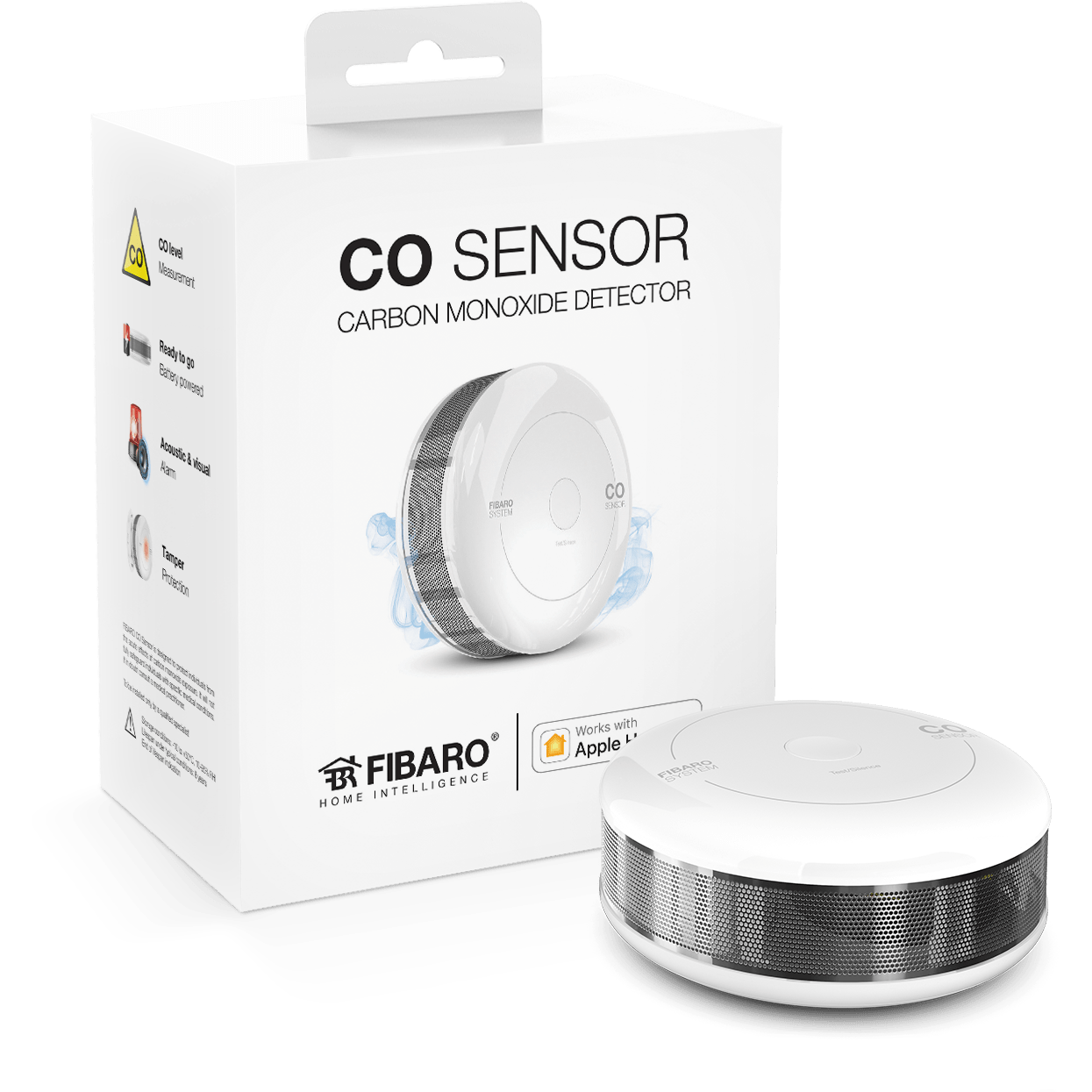
The Fibaro CO Sensor is a compact, battery-powered carbon monoxide detector designed for wall mounting and integrated smart-home use. Combining an audio siren, multi-color LED indications and a built-in temperature sensor, it detects CO early to help prevent poisoning and can communicate alarms and sensor data across Z-Wave networks.
Lightweight and fully wireless, the unit runs on a single CR123A 3.0V battery with an estimated three-year life on default settings. It supports Z-Wave Plus, AES-128 security, and can operate as a stand-alone alarm or as part of a broader FIBARO smart home. When connected to a Z-Wave controller, the device reports CO levels, tamper events, battery status and temperature, and can directly control associated devices through multiple association groups.
Installation is straightforward: mount the cover on a wall (recommended below ceiling level and at least 30 cm from corners), insert the battery, and attach the sensor. Avoid bathrooms, direct sunlight, heat sources and locations where small children can access it. The sensor should be cleaned with a damp cloth and never painted.
Operation includes a manual wake-up button used for configuration, inclusion/exclusion from Z-Wave networks, self-tests, firmware updates and factory reset. A menu (accessed by a long press) lets you run range tests, send the CO alarm state, start firmware updates, or reset the device. Audible and visual alerts include a loud multi-beep siren and colored LED patterns: red for CO alarm, yellow for low battery, cyan for end-of-life or firmware updates, blue for heat alarm, white for menu/firmware, green for successful network addition and magenta for out-of-range alerts.
Advanced parameters allow customization of wake-up intervals, notification triggers, LED and acoustic behaviors, secure association settings and detailed CO-reporting thresholds and hysteresis. You can configure actions for association groups: Lifeline for controller reporting, CO Alarm and CO Level groups to trigger other devices, and tamper groups for security. CO concentration reporting, alarm thresholds and timing are adjustable, enabling tailored automation such as switching ventilation or alerting other smart devices.
Safety notes emphasize that CO is colorless and odorless, symptoms resemble flu, and the sensor does not replace proper ventilation or long-term medical advice. It may not detect long-term low-level exposure. Replace the sensor at its end-of-life or if sensor errors are reported.
Notes
- Use only the specified CR123A battery and respect polarity. Dispose of batteries properly.
- Replace the device before the date printed on it or when end-of-life is indicated.
- In security-enabled Z-Wave networks, use a security-enabled controller to utilize full functionality.
Search for 166 Manuals online


Type-in Brand or Model