
Sophos APX 320 Manual
PDF manual · 23 Pages
English



Ask a Question
Frequently Asked Questions
The APX 320 supports IEEE 802.11 a/b/g/n/ac Wave 2. It uses dual‑band radios with MIMO 2x2:2 and provides up to 867 Mbps on the 5 GHz band plus additional capacity on 2.4 GHz, suitable for small to medium deployments.
Is this answer helpful?
The APX 320 is powered exclusively via Power over Ethernet and requires 802.3af PoE. There is no dedicated DC power input, so you must use a PoE switch or PoE injector; Sophos offers compatible injectors as optional accessories.
Is this answer helpful?
Yes — the APX 320 is designed for central management through Sophos Central for quick onboarding and configuration. To communicate with Sophos Central, ensure your firewall allows outbound ports 443 (HTTPS), 80 (HTTP) and 123 (NTP).
Is this answer helpful?
The APX 320 supports wall mount, ceiling rail mounts (15/16", 9/16", 3/8"), and can be used with optional flat ceiling, plenum, or suspend mounting kits for varied installation needs. A mounting bracket ships with the unit for standard mounts.
Is this answer helpful?
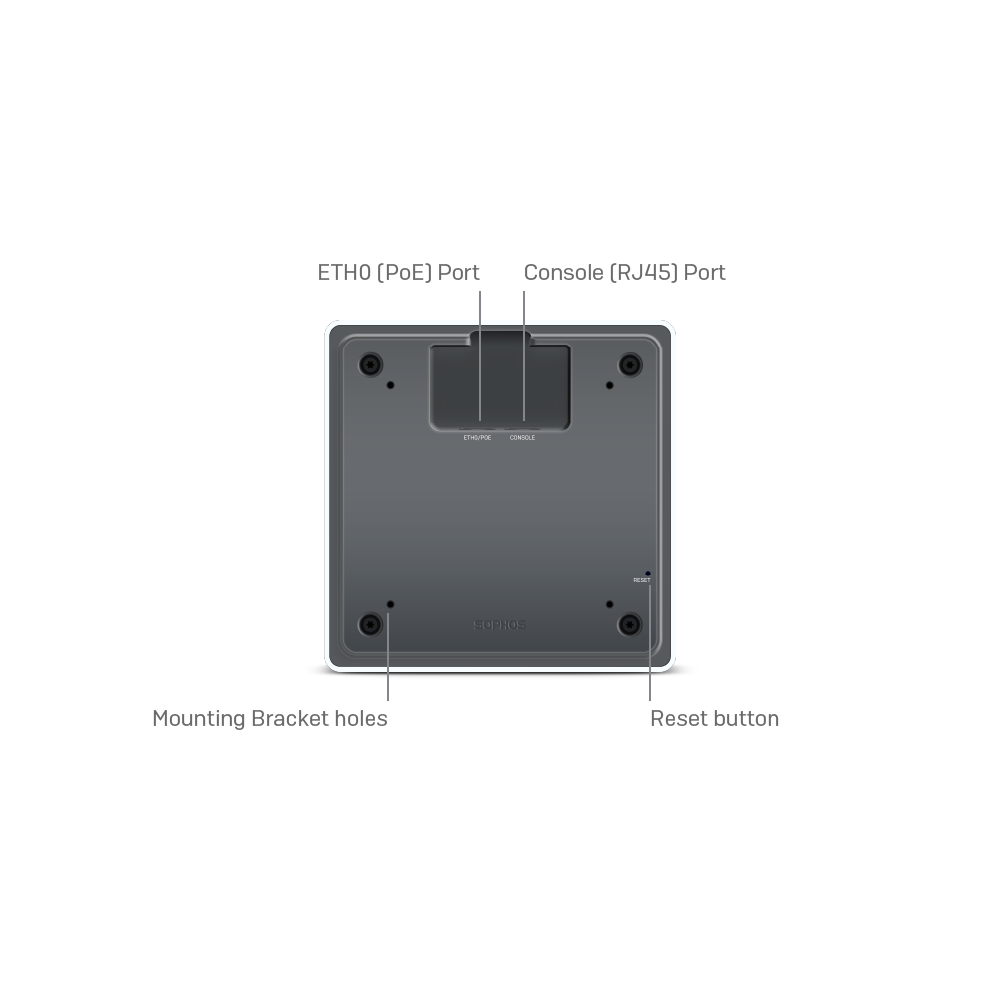
Use the reset button: a short press reboots with the current configuration. Press-and-hold triggers configuration clearance and resets to factory defaults — LED indications guide each step. Release during the countdown to cancel a reset.
Is this answer helpful?
Yes — the APX 320 includes an RJ‑45 serial console port. Serial settings are 38,400 bps, 8 data bits, no parity, 1 stop bit (8N1). Local console access is enabled by default on ttyS1 for debugging and support.
Is this answer helpful?
Operating temperature ranges from 0° to 40°C with storage from -40° to 70°C and humidity 10–95% non‑condensing. The device is RoHS‑2 and REACH compliant and meets standard regulatory requirements for indoor deployment.
Is this answer helpful?
Advantages and Disadvantages
Advantages

- Easy cloud onboarding via Sophos Central for rapid deployment and centralized management.
- 802.11ac Wave 2 dual‑band radios with BLE and MIMO deliver strong wireless performance for small-to-medium venues.
- PoE powered (802.3af) simplifies cabling and eliminates the need for separate power adapters.
- Multiple mounting options (wall, ceiling, plenum, suspend) support flexible installations.
- Compact design with status LED, console port and clear reset procedures aids troubleshooting and recovery.
Disadvantages

- Single PoE Ethernet port limits network design flexibility compared with multi‑port models.
- Requires PoE and offers no dedicated DC input—may need PoE injectors or compatible switches.
- Advanced on‑premises management via XG Firewall depends on future maintenance releases.
- Max throughput and MIMO (2x2) are lower than higher‑end APX models for very high-density deployments.
- Some mounting kits (flat ceiling, plenum, suspend) are optional accessories and sold separately.
Product Description
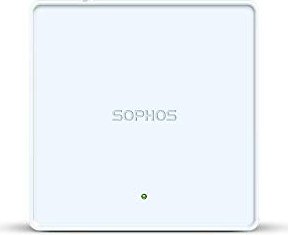
Sophos APX 320 — Powerful, Easy-to-Deploy Wave 2 Access Point
The Sophos APX 320 is a compact, high-performance wireless access point engineered for modern networks that demand reliable Wi‑Fi and simplified cloud management. Built on 802.11ac Wave 2 technology, the APX 320 delivers dual‑band connectivity with up to 867 Mbps on 5 GHz radios and supports up to 16 SSIDs. It integrates Bluetooth Low Energy (BLE) for location services and device discovery, and includes internal omni‑directional antennas tuned for both 2.4 GHz and 5 GHz bands.
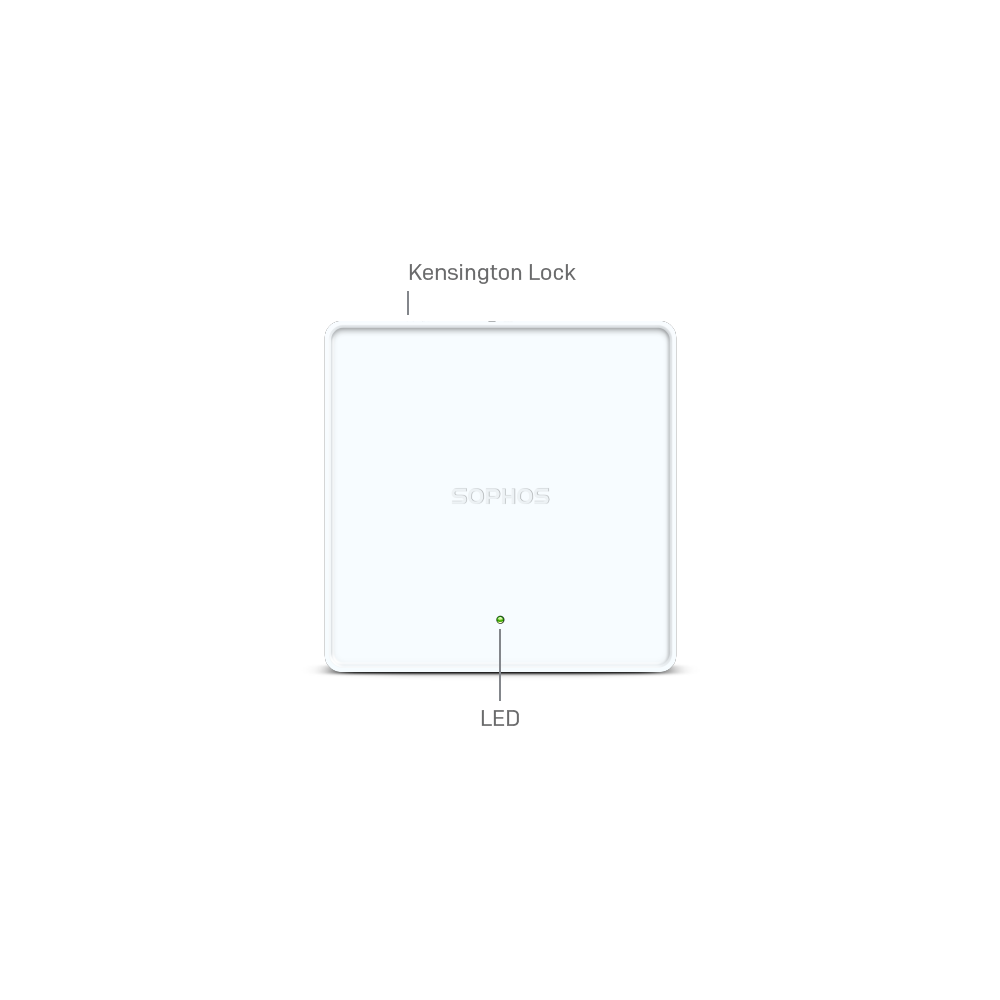
Designed for straightforward deployment, the APX 320 is powered exclusively via PoE (802.3af) and includes a single Gigabit Ethernet port for network connectivity. Its status LED communicates boot, update, and error states for quick troubleshooting. A console RJ‑45 port and a reset button provide administrators with local debugging and factory reset options when needed. The device supports a variety of mounting options — wall, ceiling (multiple ceiling rail sizes), flat ceiling, plenum, and suspend mounts — making it suitable for offices, classrooms, retail, and other indoor environments.
Management is focused on simplicity and scale. The APX 320 can be centrally managed through Sophos Central, allowing administrators to onboard, claim, and configure access points via a cloud controller. Integration with Sophos XG Firewall management is planned in maintenance releases, offering more on‑premises control. For connectivity, typical firewall ports (HTTPS, HTTP, NTP) must be open to allow communication with Sophos Central.
Technically, the APX 320 ships with 512 MB DDR3L memory and 512 MB NAND flash. It supports two radios (one dual‑band and one 5 GHz) with MIMO 2x2:2 capabilities and a combined max throughput suitable for small to medium deployments. Environmental tolerances (0–40°C operating, -40–70°C storage) and regulatory compliance (RoHS‑2 and REACH) make it a practical choice for varied installations. LED behavior, reboot/reset procedures, and serial console settings (38,400 bps, 8N1) are detailed to help administrators operate and recover devices reliably.
Whether you need a discreet ceiling unit for office spaces or a wall/hang mount for retail and hospitality, the APX 320 balances performance, manageability, and flexible installation. Its focus on cloud onboarding and PoE simplicity reduces setup time while delivering enterprise Wi‑Fi features in a compact package.
Notes
- Requires PoE (802.3af) — no dedicated DC power input.
- Works with Sophos Central for fast cloud onboarding; XG Firewall support is available via maintenance releases.
- Provides BLE for location-aware services and device interactions.
- Includes multiple mounting kits (some optional) for diverse installation scenarios.
Search for 166 Manuals online


Type-in Brand or Model