

Drawmer 1968 MKII Manual
PDF manual · 10 Pages
English


Ask a Question
Frequently Asked Questions
The 1968 MkII uses a J-FET gain reduction circuit for fast, responsive compression and a 12AX7 tube makeup amplifier for up to 20 dB of added output gain, combining FET control with tube coloration.
Is this answer helpful?
BIG and BIGGER reduce sidechain sensitivity to low frequencies so bass energy causes less ducking. This preserves a stronger, tighter low end and reduces pumping when heavy low-frequency material is present.
Is this answer helpful?
Attack offers six selectable times (2, 9, 15, 25, 30, 50 ms). Release has three fixed times (100 ms, 500 ms, 1 s) plus three program-dependent modes that adapt from hundreds of milliseconds up to 10 seconds depending on input dynamics.
Is this answer helpful?
Yes. A stereo link mode makes Channel 1 the master and applies identical gain reduction to both channels for true stereo buss operation without image shifting.
Is this answer helpful?
Two illuminated VU meters display either output level or gain reduction, with a selectable VU +10 dB re-scale for hot levels and a red glow indicating approaching clipping. A meter switch toggles between VU, VU +10 dB and GR modes.
Is this answer helpful?
Use the supplied mains cable and keep the mains earth connected. Follow the manual for voltage selection and fuse ratings (160 mA for 230 V, 315 mA for 115 V). Do not tamper with the cable and leave repairs to qualified service personnel.
Is this answer helpful?
The sidechain access is unbalanced via stereo 1/4" jacks: ring = send, tip = return, sleeve = ground. Use proper routing and grounding to avoid noise or ground loops.
Is this answer helpful?
Advantages and Disadvantages
Advantages

- Hybrid tube/FET design combines fast gain reduction with warm tube makeup for musical tone.
- Flexible attack and adaptive release options suit transient-heavy or program material.
- BIG/BIGGER modes reduce bass pumping while preserving tight low end.
- Sidechain access and listen enable de-essing and frequency-selective compression.
- VU metering with +10dB re-scale and clipping warning aids precise level and GR monitoring.
Disadvantages

- Tube circuitry requires ventilation and may need periodic maintenance.
- No dedicated ratio control limits very specific compression curve sculpting.
- Sidechain jacks are unbalanced, requiring care in routing and grounding.
- Unit occupies 1U and can heat if rack-mounted above hot gear.
- Voltage selection and fuse changes require competent service handling.
Product Description
Drawmer 1968 MkII — Dual Channel Vacuum Tube Compressor
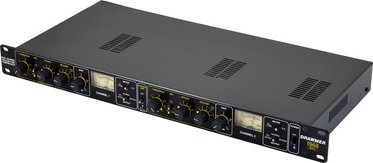
The Drawmer 1968 MkII is a 1U rack-mounted dual-channel compressor that blends tube warmth with FET speed to deliver transparent, musical compression for tracking, mixing and stereo-bus duties. It uses a J-FET gain reduction stage for fast, responsive control and a 12AX7 tube makeup amp allowing up to 20 dB of output gain. The compressor uses a soft-knee topology so compression engages progressively, removing the need for a ratio control and providing smooth, natural dynamics.
Available attack settings range from tight, punchy 2 ms to relaxed 50 ms, while release options include three fixed times (100 ms, 500 ms, 1 s) and three program-dependent modes that adapt automatically to incoming material. This combination gives engineers precise transient control or program-adaptive smoothing depending on the material.
Each channel features BIG and BIGGER modes that reduce sidechain sensitivity to low frequencies, preventing bass-induced pumping and preserving a tight, solid low end while allowing more aggressive compression without boomy artifacts. Full sidechain access and a sidechain-listen mode let you insert EQ or de-essing circuits for surgical dynamic shaping.
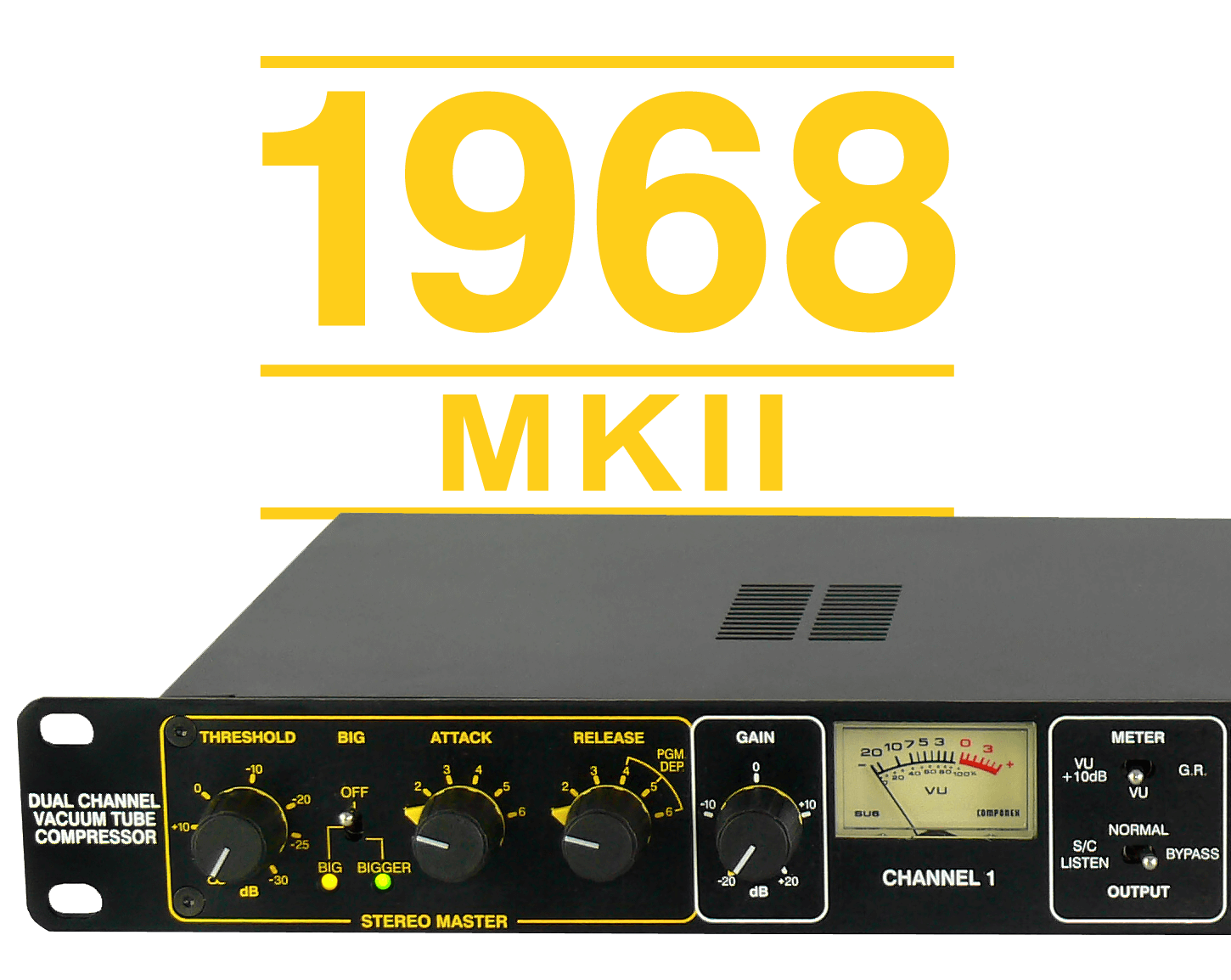
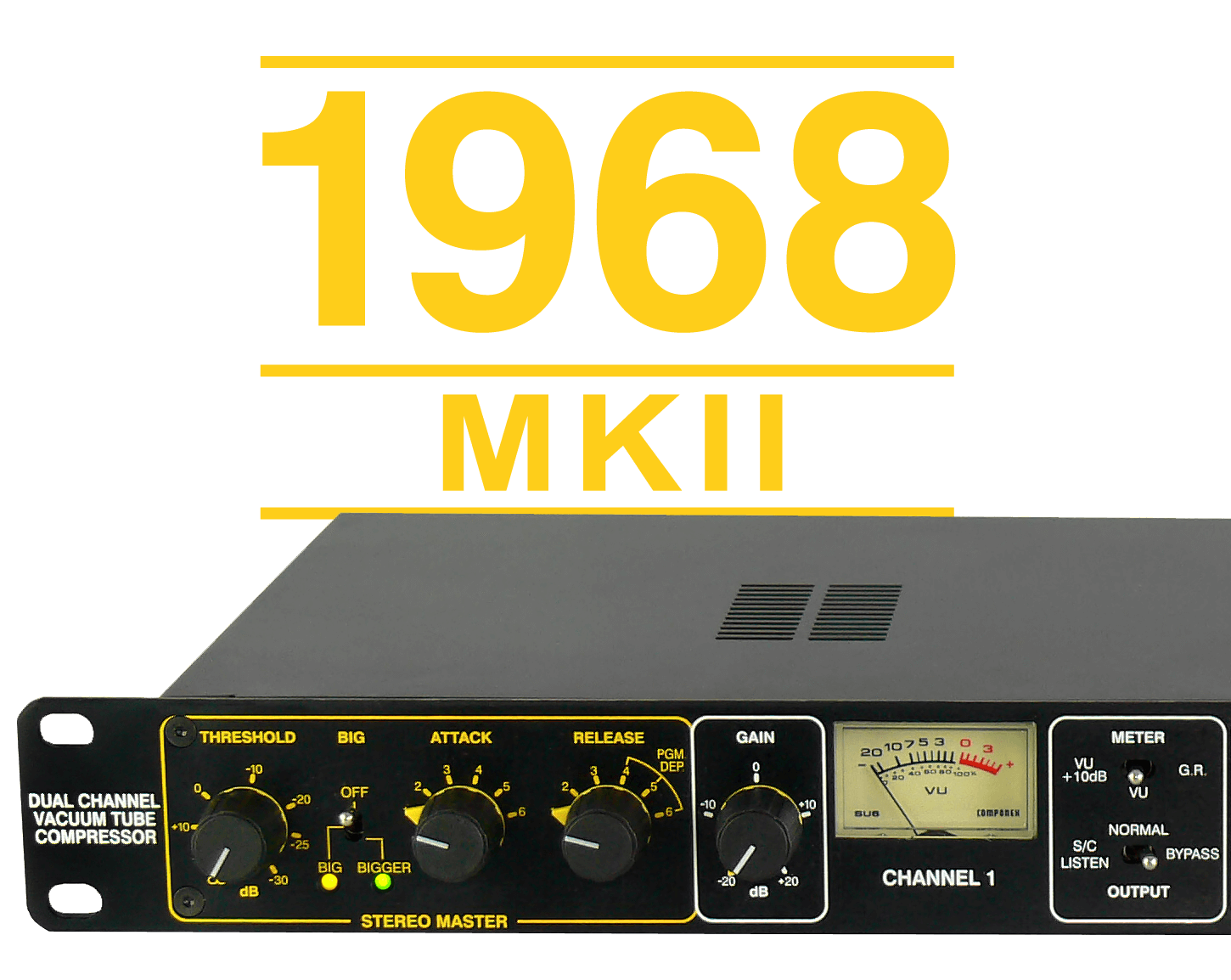
Instrumentation and monitoring are practical: illuminated VU meters show output level or gain reduction, with a +10 dB re-scale for hot levels and a red warning glow to indicate approaching clipping. The front-panel controls include threshold, attack, release, output gain, stereo-link for true stereo bus operation, and a Normal/Bypass/Sidechain Listen switch. Inputs and outputs are balanced XLRs with nominal +4 dBu operating level.
Built with professional facilities in mind, the 1968 MkII includes selectable mains voltages, specified fuse ratings, and service guidance. Thermal behavior from the tube stage requires rack spacing for ventilation. Specs highlight wide bandwidth, low noise, low distortion in bypass, and robust crosstalk performance.
Whether used on individual sources or the stereo buss, the Drawmer 1968 MkII offers a hybrid character: the speed and control of FET-based gain reduction with the harmonic richness of tube makeup gain. It’s aimed at engineers who want clarity and punch with a touch of analog warmth.
Notes
- Soft-knee compression provides musical, progressive gain reduction without a dedicated ratio control.
- Sidechain insert and listen support EQ-based de-essing and frequency-aware compression.
- BIG/BIGGER modes help tame low-frequency pumping on full mixes.
- Designed for +4 dBu balanced operation; use balanced wiring to reduce interference.
Search for 166 Manuals online


Type-in Brand or Model